WiCAS Participation Report – IEEE ISCAS 2025
The IEEE International Symposium on Circuits and Systems (ISCAS) 2025 was a truly special and historic event. The last time it was hosted in London was in 1994, and this year, we made history once again with the highest participation ever welcoming over 1,500 colleagues from across the globe.
Women in Circuits and Systems (WiCAS) played a central role in the success of ISCAS 2025, led by the WiCAS Chair Nagham Saeed, who also served on the conference organising committee. The energy, insightful discussions, and overwhelmingly positive feedback throughout the week were inspiring. WiCAS led and actively participated in three key initiatives during the conference:
1. WiCAS Signature Panel Session
- Date & Time: Monday, May 26, 16:00–18:15
- Attendance: Over 50 participants
- Session link: WiCAS 2025 Panel Session
The session opened with remarks by Nagham Saeed, who introduced the program and highlighted WiCAS's ongoing involvement with ISCAS, including an overview of the WiCAS Best Paper Award finalists.
A welcome address from ISCAS Co-Chair Alison was followed by an opening talk from IEEE President Kathleen Kramer.
The program continued with an engaging keynote talk Dr Işıl Kalafat Kızılkaya- Senior Silicon Design Engineer · AMD followed by panel discussion featuring dynamic audience interaction (figure 1).
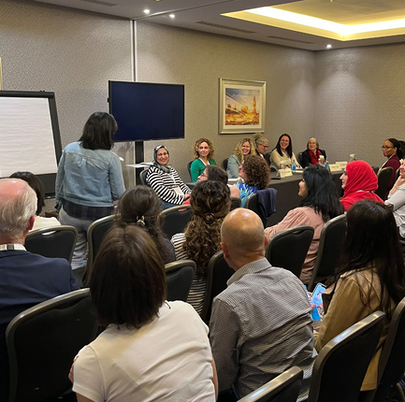
Figure 1: Panel discussion (left)
After a networking refreshment break, attendees participated in an interactive world café-style session, where participants shared personal career insights, challenges, and advice.
Participant Feedback:
A group photo was taken at the end of the WiCAS
2025 session, figure 2
Fatim Sbai, from the University of West London, remarked:
“I thoroughly enjoyed attending the WiCAS session. It was not only informative but also incredibly welcoming and encouraging. Hearing from the panel about their journeys into engineering, especially the experiences of often being the only woman in the room, resonated deeply with me. As someone working in cybersecurity, a field where I have often felt isolated, the session helped me feel a genuine sense of belonging… It left me feeling both empowered and connected to a broader, supportive community of women in STEM.”
Additional reflections were offered by Giulia Di Capua, Chair of IEEE CASS Diversity, Equity, and Inclusion Committee (DEICAS):
"The WiCAS session at ISCAS 2025 embodied the spirit of inclusion, equity, and empowerment. It’s wonderful to see how such thoughtful initiatives create meaningful connections and celebrate diverse voices in our community. I sincerely hope this energy continues to inspire the WiCAS and YPCAS communities across our society—fully aligned with the mission of all DEICAS activities promoted within CASS.”
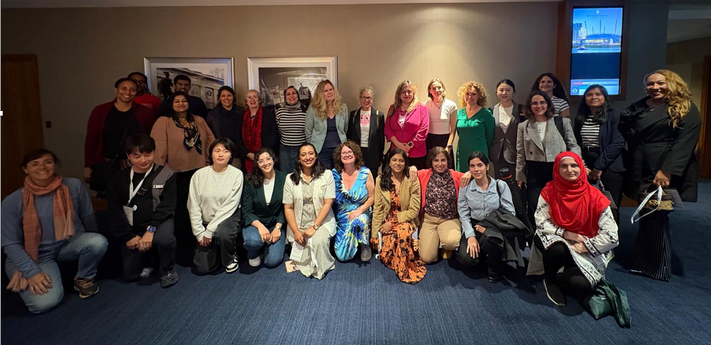
Figure 2: WiCAS 2025 Group Photo (above)
2. WiCAS Best Paper Awards
- Session link: WiCAS Best Paper Awards
WiCAS proudly recognised six outstanding papers authored by women researchers in the field of circuits and systems. The award certificates were presented during the conference closing ceremony, marking a celebration of technical excellence and innovation. Figures 3,4,5, and 6 are for the winner of the WiCAS Best paper awards.
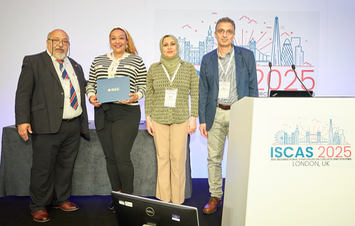
Figure 3: Winner on WiCAS Award Fatim Sbai-University of West London, UK, with conference organisers (left)
Figure 4: Winner on WiCAS Award Razieh Eskandari, Westlake University, China, with conference organisers (below left)
Figure 5: Winner on WiCAS Award Kyungmin Lee Konkuk University, Korea, with conference organisers (below right)
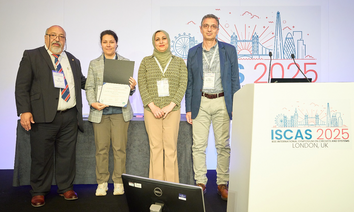
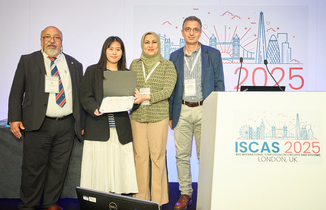
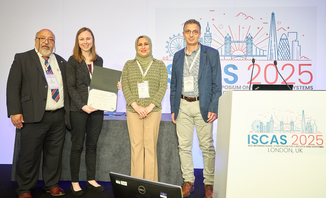
Figure 6: Winner on WiCAS Award Brianna Hajek, University of Illinois Urbana-Champaign, US, with conference organisers (right)
3. Sponsorship of the Industrial IoT Session
- Date & Time: Wednesday, May 28, 09:30–11:00
This well-attended technical session highlighted emerging research in Industrial IoT. WiCAS’s sponsorship underscored its ongoing commitment to supporting women researchers in cutting-edge technological fields.
During the session, the WiCAS Chair delivered a presentation showcasing the organization’s mission and impact. This was followed by keynote talks (figure 7) and technical paper presentations.
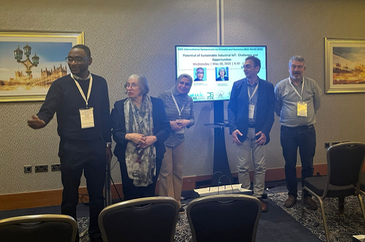
Figure 7: IIoT session Keynote speakers and moderators (left)
ISCAS 2025 marked a significant achievement for
the WiCAS community, both in terms of visibility and engagement. Building on
this momentum, WiCAS looks forward to expanding its initiatives and continuing
to foster an inclusive and empowering environment for women in circuits and
systems.
Reported by Xiaozhe Wang
____________
YPCAS Event at ISCAS 2025
IEEE Young Professionals Panel and Best Paper Awards at ISCAS 2025
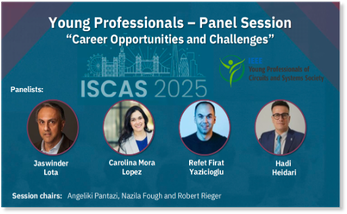 The IEEE Young Professionals in Circuits and Systems
(YPCAS) initiative successfully organized a vibrant and well-attended panel
session titled “Career Opportunities and Challenges” at the 2025 IEEE
International Symposium on Circuits and Systems (ISCAS), London, UK, on May 26,
2025. This session aimed to empower and inspire early-career researchers, PhD
students, and young professionals in the circuits and systems community by
providing a platform for open dialogue, shared experiences, and professional
guidance.
The IEEE Young Professionals in Circuits and Systems
(YPCAS) initiative successfully organized a vibrant and well-attended panel
session titled “Career Opportunities and Challenges” at the 2025 IEEE
International Symposium on Circuits and Systems (ISCAS), London, UK, on May 26,
2025. This session aimed to empower and inspire early-career researchers, PhD
students, and young professionals in the circuits and systems community by
providing a platform for open dialogue, shared experiences, and professional
guidance.
The panel brought together distinguished experts from both academia and industry, reflecting a rich diversity of career trajectories: Jaswinder Lota (University of East London, UK); Carolina Mora Lopez, (IMEC Leuven, Belgium); Refet Firat Yazicioglu, (Galvani Bioelectronics, UK); Hadi Heidari, (University of Glasgow, UK).
The session was co-organized by Angeliki Pantazi (IBM Research-Zurich), Nazila Fough (University of Glasgow, UK), and Robert Rieger (Kiel University, Germany). Over 100 participants attended the event, engaging in a lively discussion that included moderated questions from the session chairs as well as direct inquiries from the audience.
Panelists shared their personal and professional journeys, highlighting pivotal moments, key challenges, and the lessons they learned along the way. Topics ranged from managing international research careers and transitioning between academia and industry, to navigating work-life balance and fostering diversity in engineering fields. Their candid reflections and practical advice offered deep insights into the multifaceted nature of career development within the circuits and systems field.
Following the session, a YP networking reception with light refreshments provided an opportunity for informal interactions, allowing young professionals to connect with speakers and peers in a relaxed and collegial atmosphere.
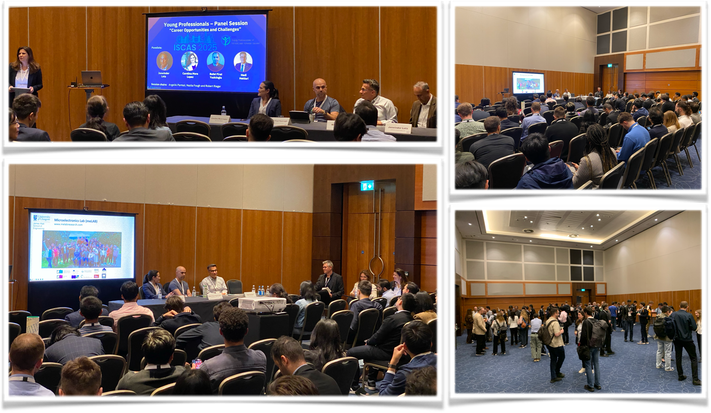
Figure 1. ISCAS 2025 YPCAS Career Opportunities and Challenges Panel Session: A vibrant discussion among panelists and over 100 attendees, followed by networking opportunities for young professionals.
Young Professionals Best Paper Awards at ISCAS 2025
As part of its continued commitment to recognizing and nurturing emerging talent, IEEE CASS also announced the finalists of the Young Professionals Best Paper Awards during the ISCAS 2025 Award Ceremony. The award celebrates innovative contributions by early-career researchers that push the boundaries of circuits and systems design, theory, and application.
Congratulations to the following finalists for their outstanding contributions: Marco Tambussi (Università degli studi di Pavia, Italy), “A 14.9-μW Quasi-Passive Error-Feedback Noise-Shaping SAR Converter with 78-dB Dynamic Range for Audio Activity Detection”; Guo Wei (Tsinghua University, China), “A 550MHz-Bandwidth 40dB-Gain Range Analog Baseband with Dynamic PVT Compensation Achieving 26.1dBm OIP3 in 28-nm CMOS”; Wenshuang Liu (Beijing Institute of Technology, China), “Optimal SVG Configuration for Enhancing Transient Voltage Stability in Power Systems with High Penetrations of Renewable Energy”; Hao Liu (University of Electronic Science and Technology of China, China), “PCBRouteNet: a Dynamic Quadrilateral Network Flow Model-Based Dataset Generation Tool for ML PCB Routing”; Ti-Yu Chen (National Taiwan University, Taiwan), “Design and Implementation of an Energy-Efficient Detector for Uplink Cell-Free MIMO Networks”; Yunchul Chung (Korea Advanced Institute of Science and Technology (KAIST), Korea), “Implantable Galvanic-Coupled Body Channel Communication Transceiver with Serpentine-Interconnection Electrode Pair for Post-Operative Monitoring of Joint Replacement.”
These exceptional papers reflect the depth and breadth of innovation being driven by young researchers across analog/digital IC design, wireless communication, power systems, biomedical circuits, and hardware for AI. The award highlights the next generation of leaders in the field and underscores IEEE CASS’ mission to promote excellence, diversity, and professional growth in the circuits and systems community.
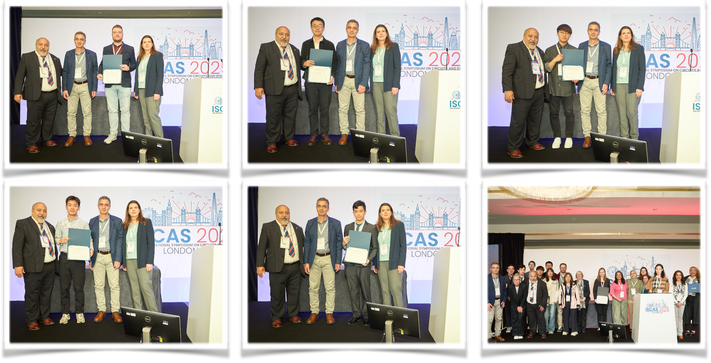
Figure 2. Award ceremony at ISCAS 2025 honoring the Young Professionals Best Paper Award recipients, celebrating excellence and innovation in circuits and systems research.
Reported by Bokyung Kim and Tim Jiang
_____________________
YPCAS Event at NEWCAS 2025
IEEE Young Professionals in Circuits and Systems (YPCAS) Event on Sustainability and Eco-Design at NEWCAS 2025
The IEEE Young
Professionals in Circuits and Systems (YPCAS) initiative successfully organized
a vibrant and engaging event on “Sustainability and Eco-Design in
Electronics” during the 2025 IEEE International NEWCAS Conference
(NEWCAS 2025), held in Paris, France, on June 24, 2025. The event took
place in the historic former Faculty of Medicine building at the University of
Paris, providing a beautiful and inspiring setting for the afternoon’s
discussions.
Co-organized by Sumanta Chaudhuri (Telecom Paris, France) and Florence Podevin (University Grenoble Alpes, France), the YPCAS event brought together a multidisciplinary community of young professionals, graduate students, and senior experts to explore how sustainability can transform the design, fabrication, and lifecycle of modern microelectronics. The program featured three engaging segments: a panel discussion, a poster session, and a networking cocktail and award ceremony, creating a dynamic environment for learning and collaboration.
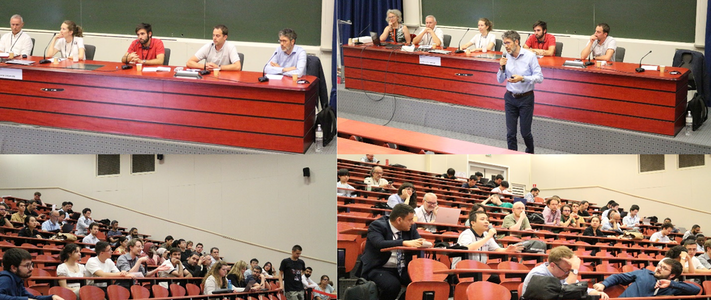
Figure 1. Panel session on “Sustainability and Eco-Design in Electronics” featuring experts from academia and industry, followed by an interactive discussion with nearly 70 participants.
The event opened with a panel session featuring distinguished experts from academia and industry: Jean-Pierre Raskin (IMEC, Belgium), Jean-Brieuc Féron (Citronics, Belgium), Thomas de Latour (ADEME, France), Laura Vauche (CEA-Léti, France), and Olivier Bouchet (Orange, France). The discussion focused on challenges and opportunities in sustainable microelectronics, addressing topics such as rare-earth material scarcity, foundry-level eco-initiatives, circular business models, and end-of-life chip reuse. Nearly 70 participants attended the lively session, which included an insightful tutorial by Prof. Raskin and a dynamic Q&A segment that encouraged audience interaction and cross-disciplinary exchange.
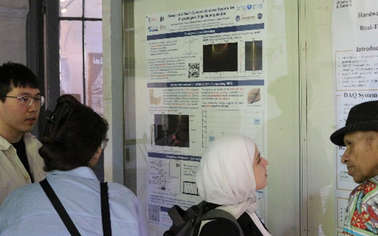
Following the panel, the poster session showcased 21 posters presented by young researchers ranging from master’s students to early-stage Ph.D. candidates. Topics included low-power circuits, neuromorphic architectures, embedded systems, sustainable IoT applications, and bio-inspired designs. The session provided a valuable opportunity for students to engage directly with senior researchers and industry professionals, fostering mentorship and collaboration within the YP community.
Figure 2 (above). Poster session showcasing 21 innovative research projects by young professionals.
The event concluded with a cocktail reception and award ceremony in the picturesque courtyard of the historic campus. Attendees enjoyed an informal networking atmosphere while celebrating the creativity and excellence of young researchers. Three poster awards were presented: the Best Poster Award (€300), the Second-Best Poster Award (€150), and the Third-Best Poster Award as an Honorary Mention recognizing promising master’s-level work.
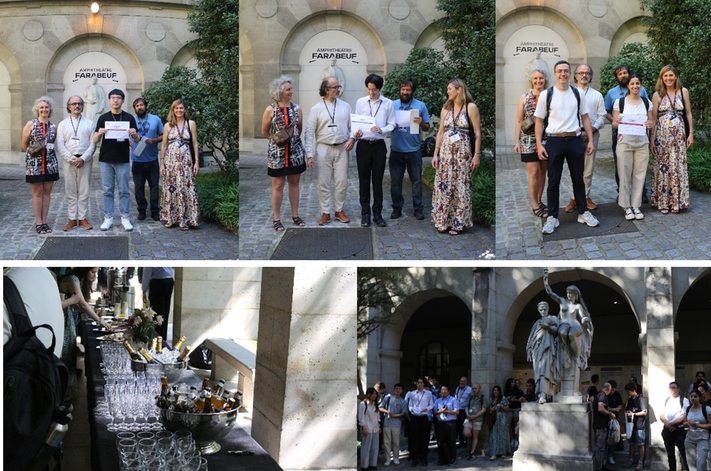
Figure
3. Award
ceremony (first, second, and third best poster awards from left to right) and
networking cocktail held in the historic courtyard of the University of Paris.
The YPCAS co-chairs express their sincere appreciation to the NEWCAS 2025 organizing committee and the IEEE Circuits and Systems Society (CASS) for their financial support and continued commitment to empowering the next generation of researchers in circuits and systems.
Reported by Bokyung Kim and Tim Jiang
_______________
From Overwhelmed to On Track: A Career Masterclass for Young Professionals at PRIME 2025
The Young Professionals in Circuits and Systems (YPCAS) event at the International Conference on PhD Research in Microelectronics and Electronics (PRIME 2025) offered an inspiring and interactive space for reflection, learning, and connection among early-career researchers and engineers within the IEEE Circuits and Systems community. Held on September 23rd, 2025, in Taormina, Italy, the event focused on professional growth, mental well-being, and resilience, blending practical coaching, interactive activities, and open discussion. It successfully promoted self-leadership, inclusion, and mentorship in alignment with the Society’s commitment to holistic professional development.
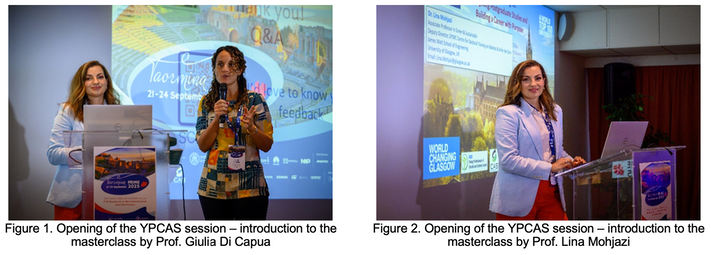
Organized and moderated by Prof. Giulia Di Capua from the University of Cassino and Southern Lazio, with Prof. Lina Mohjazi from the University of Glasgow as keynote speaker, the YPCAS session addressed the growing need for spaces where young researchers can reflect on their career journeys beyond the purely technical dimension (Figure 1). The title “From Overwhelmed to On Track” embodied the aim of helping participants regain clarity, motivation, and confidence while navigating the demanding landscape of postgraduate research and early professional life. Against the picturesque backdrop of Taormina, the event offered attendees a unique opportunity to step back from the pressures of research and engage in open conversation about personal growth, mental health, and building sustainable careers in science and engineering. The masterclass combined storytelling, reflection, and participatory exercises inspired by coaching methodologies (Figure 2). The program unfolded progressively, fostering self-awareness and actionable insights for personal and professional development. The opening activity invited participants to position themselves along a timeline representing their academic path, visually sharing whether they were at the beginning, middle, or end of their PhD journey. This icebreaker immediately created empathy and a sense of connection among the group.
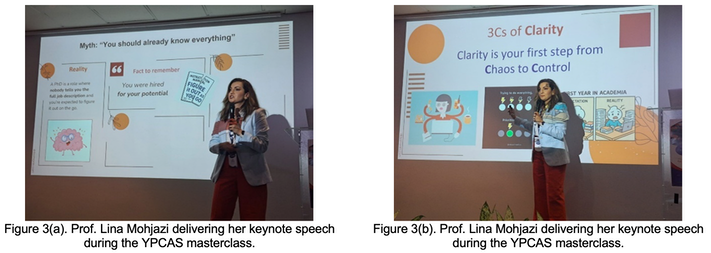
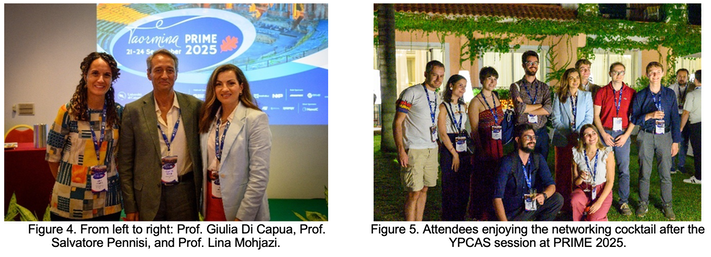
The discussion then focused on redefining success in postgraduate studies, challenging the common academic myth that “success equals publications” and emphasizing instead personal growth, collaboration, and work-life balance. Participants were encouraged to reflect on the most difficult aspects of their journeys, both emotionally and practically. A particularly engaging moment was dedicated to the themes of impostor syndrome and self-sabotage. Prof. Lina Mohjazi shared personal experiences of self-doubt and perseverance, encouraging attendees to embrace vulnerability as a source of strength (Figures 3a–3b). This was followed by a “coaching circle”, where participants exchanged anonymous messages of encouragement, transforming individual vulnerability into collective empowerment. Prof. Mohjazi’s keynote connected her research trajectory to reflections on purpose-driven work, confidence, and authenticity, offering valuable insights on how to build meaningful and sustainable careers. Her talk was warmly received by the PRIME 2025 organizers (Figure 4) and stood out as one of the conference highlights, deeply resonating with PhD students and early-career researchers. The closing discussion addressed issues such as professional uncertainty, motivation, and resilience, emphasizing that success is not linear and that meaningful careers are built through adaptability, self-knowledge, and community support. The event concluded with a networking cocktail that provided an informal setting for continued dialogue and new connections (Figure 5). The relaxed atmosphere fostered genuine conversations that extended well beyond the scheduled program, reflecting the sense of belonging that YPCAS initiatives strive to create.
Sincere gratitude is extended to Prof. Salvatore Pennisi and Prof. Alfio Dario Grasso, General Chairs of PRIME 2025, for their hospitality and support in integrating YPCAS activities into the main conference program. Appreciation also goes to Dr. Gianluca Giustolisi for providing beautiful photographs of the event, as well as to the PRIME 2025 organizing team and volunteers for their contribution to logistics and promotion. Special thanks are due to Prof. Lina Mohjazi for her inspiring and heartfelt participation, and to the IEEE Circuits and Systems Society (CASS) for its financial support and continuous commitment to diversity, inclusion, and mentorship.
Reported by Giulia Di Capua
___________________________
Empowering Women’s Role in Biomedical Sciences and Technologies: A Women in Circuits and Systems (WiCAS) forum at IEEE BioCAS 2025
On October 16th 2025, a WiCAS event took place as part of the IEEE CASS Biomedical Circuits and Systems (BioCAS 2025) in Khalifa University, Abu Dhabi, UAE. The event brought together women researchers, engineers, students, and professionals to engage in scientific exchange, leadership development, and networking. The program featured welcome remarks, a keynote lecture (Prof. Rabia Yazicigil, Boston University) on emerging bioelectronic technologies, a multidisciplinary panel discussion, a professional development workshop on emotional intelligence and time management, and recognition of outstanding research through the WiCAS Best Paper Awards.
A central feature of the event was the panel discussion (Figure 1), moderated by Dr. Nouha Alcheikh and Dr. Eman Hassan. The panel brought together women leaders from healthcare AI, clinical simulation, sustainable materials, and technology development. Their diverse perspectives enriched the dialogue and provided attendees with actionable insights grounded in real-world experience.
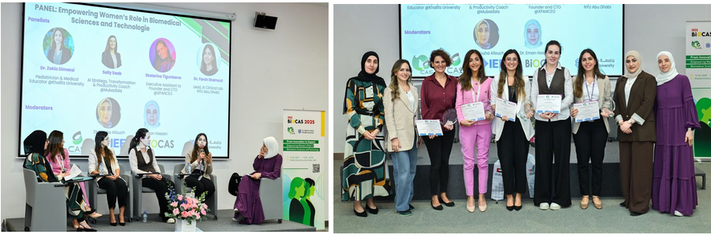
Figure 1. Panel discussion during the WiCAS forum (Panelists: Zakia Dimassi, Khalifa University, Farah Shamout, NYU Abu Dhabi, Sally Saab, Mubadala, Ekaterina Tiguntseva, XPANCEO)
Adding another valuable dimension, Dr. Alia Soliman led a highly interactive Professional Development Session focusing on emotional intelligence and time mastery for women in STEM. Through group-based reflection activities and scenario-driven discussions (Figure 2), participants explored strategies for self-awareness, communication under pressure, priority setting, and balancing personal and professional demands. Her session reinforced the idea that technical excellence must be paired with intentional personal growth in order to sustain leadership over the long term.
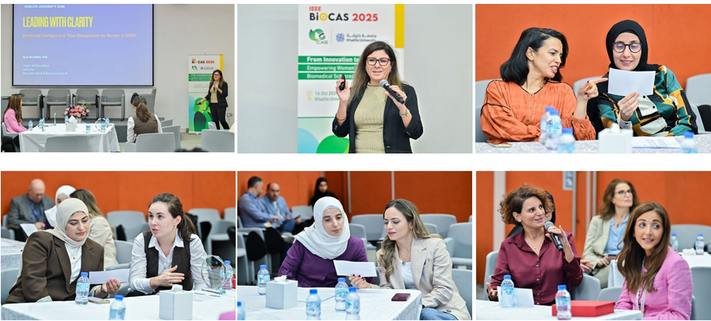
Figure 2. Emotional Intelligence & Time management for Women in STEM Workshop.
The evening concluded with a warm and engaging networking dinner, where participants continued the day’s discussions in a relaxed and collaborative atmosphere. Attendees shared research ideas, explored potential collaborations, and exchanged experiences that crossed disciplinary and geographic boundaries. Certificates, trophies, and appreciation gifts were presented during the WiCAS event to the keynote speaker, panelists, and the dedicated student volunteers, whose professionalism and enthusiasm were essential to the success of the program. Positive feedback from attendees highlighted the value of the discussions, diversity of expertise, and meaningful opportunities for interaction. In conclusion, the event provided an inclusive forum for inspiration, mentorship, collaboration, and celebration of women’s contributions to biomedical circuits and systems.
Reported by
Shimaa Eissa, Nouha Alcheikh, Lilas Alrahis, Eman Hassan and Patricia
Desgreys, WiCAS co-Chair, IEEE CASS